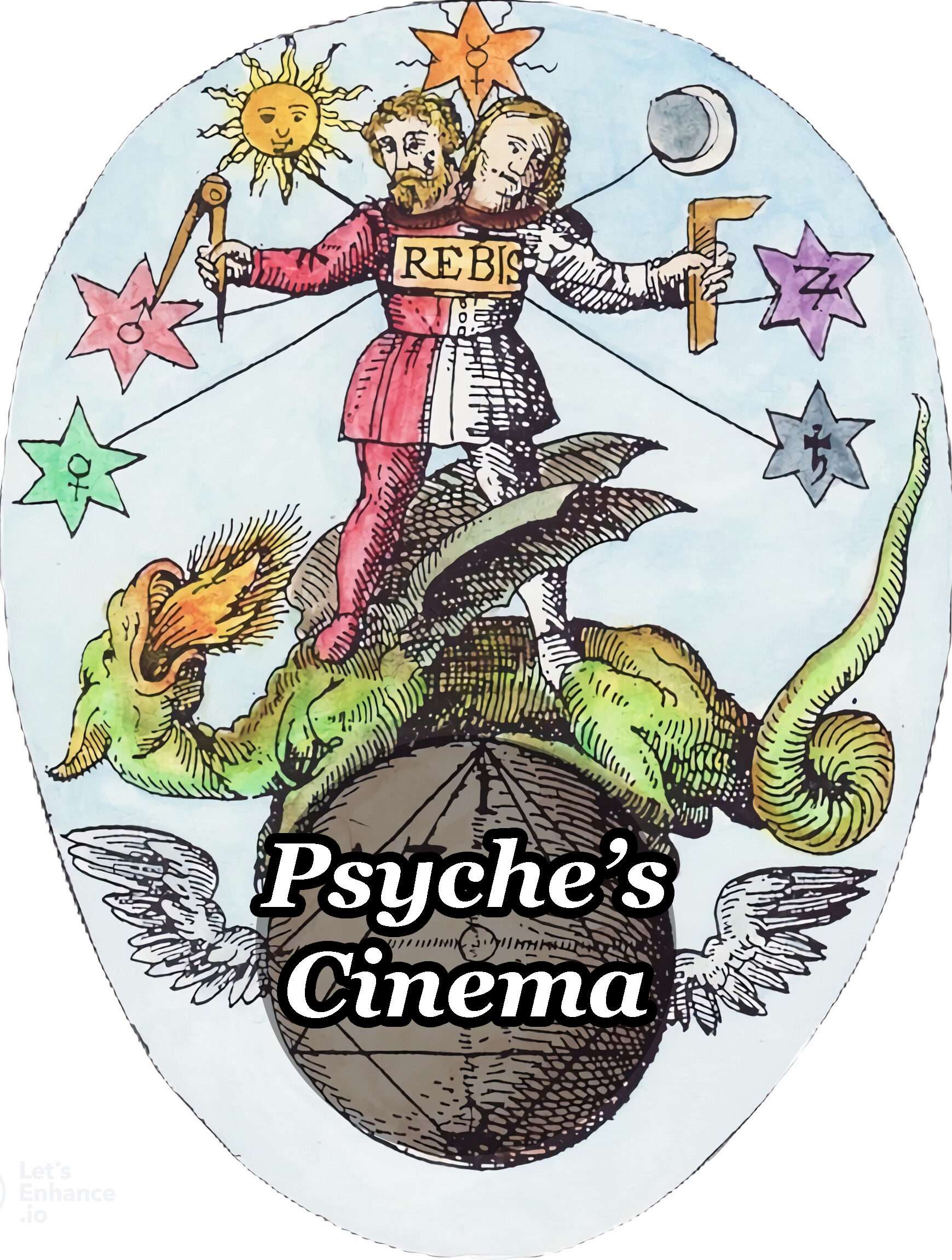

Without contraries (that is, without a tension of opposites) there is no progression, or life, [William] Blake tells us, as though anticipating Jung’s model of psychic dynamics and, in particular, his concept of the psyche’s transcendent function.~Ann Yeoman
SPOILERS BELOW!
Spiritual Bypassing, Shadow and Ego in Pluribus
I’ve been thinking a lot about the brilliant Apple TV series, Pluribus, created by Vince Gilligan. Why has this sci-fi show become such a cultural phenomenon? It isn’t because the acting, direction, writing, and cinematography are all exceptional. Other shows can boast the same. Pluribus is unique in that it resonates a truth about our outer world and also our inner world –our unconscious struggles and the collective unconscious that we sense. (I think this also happened when the first “Hunger Games” film came out). Pluribus taps into our current life concerns of isolation and conformity vs. individuality. On an unconscious collective level, Pluribus explores what evolution and growth might look like for our species.
On the one hand, Pluribus follows a familiar story in which only a few people survive the zombie-apocalypse. In this interpretation, Carol is the hero and her motives are noble. She wants/needs to save humanity from a numbing conformity. For Carol (and most of us?) individuality is a moral and psychological necessity.

But since Zosia and all the members of the Hive seem exceptionally kind and self-less, Gilligan forces us to question this default interpretation. Pluribus questions whether the good aspects of individuality (creativity, intimacy, growth through struggle) outweigh the costs. As depicted in the season finale, our world can be destroyed if one very powerful person achieves the means of destruction.
Perhaps the problem is that the alien force has created a short cut toward enlightenment and unity. The Hive feels wrong because they are exhibiting a form of spiritual bypassing.1 There is no gradual learning or struggle, and so, in a cult-like way, the individual (that might have remained if she/he had gradually attained insight) is now obliterated. And all individual relationships – even with animals, are now gone.
Jungian Robin Robertson quotes Jung saying, “if the westerner tries to let go of his ego too fast, the shadow can grow to godlike proportions.” Is the desire to be perfectly peaceful part of the Hive’s shadow? In the last episode of season one, we see the ultimate disaster that comes from the Hive members’ inability to “say no” to any request. In trying to be purely accommodating, they facilitate (a possible) nuclear disaster.

The great myths and stories of the world imply that there is no growth without an individual heroic struggle. When the Hive short-circuits this necessary struggle, do we lose all growth, and all art? It seems that Carol is the only creative person left on the earth. Although all members of the Hive know all the art of all times, can any of them create? The Hive may be an illustration of the “Kingdom of God” that the scriptures describe (The lion lays down with the lamb, etc.) But are our individual struggles necessary to bring it about?
Pluribus is magnificently contradictory and paradoxical. It forces us to explore the meaning of our individuality. As a “western person” it is almost impossible for me (like Carol) to imagine giving up my individual ego’s desires. Just imagining joining the Hive helps me see the power of ego and how it runs me. Gilligan asks if this is a good or bad reality? To give up letting my ego run my show feels like death. It feels like death to Carol also. The question is: what is the healthy thing to do for the earth or for myself? Gilligan gives us an impossible choice, forcing us to stay in an uncomfortable paradox, waiting for a “third thing” to emerge. Carl Jung called this the “transcendent function.” He describes it as
Out of [the] collision of opposites the unconscious psyche always creates a third thing of an irrational nature, which the conscious mind neither expects nor understands. It presents itself in a form that is neither a straight “yes” nor a straight “no.”
It is difficult to stay in the tension of the opposities but it is vital for transformation and spiritual growth. We might picture this intense spiritual struggle as a crucifixion, or Odin hanging from the world tree, or Carol trying to maintain her unique journey while others seek to end it.
Spiritual Bypassing, Shadow and Ego in Pluribus
- I originally coined the term spiritual bypassing in 1984, to describe a common tendency I discovered among Western spiritual seekers to use spiritual ideas and practices to avoid dealing with their emotional unfinished business. ~John Welwood, Toward a Psychology of Awakening ↩︎